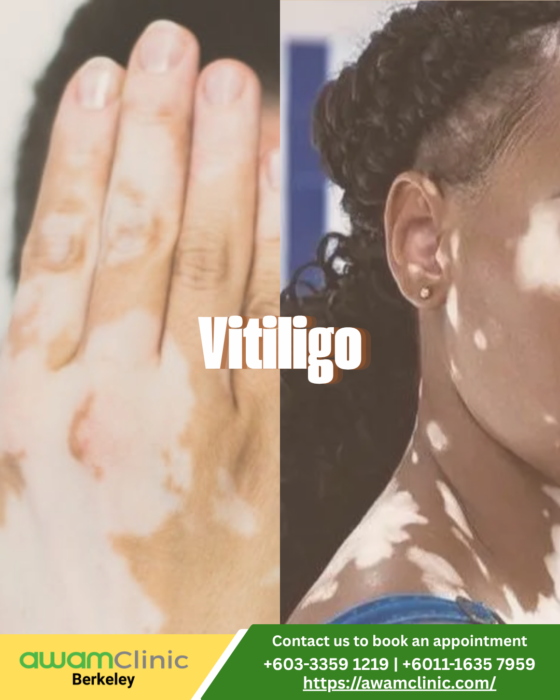
Vitiligo occurs when pigment-producing cells (called melanocytes) are damaged or do not function properly. This causes certain areas of the skin to become lighter or white compared to the surrounding skin.
Causes:
The exact cause is not fully known, but several factors are associated with it:
Autoimmune condition – the immune system attacks its own melanocytes
Genetic factors – family history may increase the risk
Physical or emotional stress
Exposure to certain chemicals
Nerve or hormonal problems
Symptoms:
The main sign is a change in skin color. Common symptoms include:
White patches on the skin (especially on the face, hands, elbows, and knees)
Hair in the affected area turning white or gray
Loss of color on the lips or inside the mouth
Sometimes changes in eye color
Vitiligo is usually not painful or itchy, but it mainly affects appearance.
Prevention & Treatment :
Vitiligo cannot be completely cured, but it can be managed:
1. Medical treatment
Light therapy (UV phototherapy)
Medications to control the immune system
2. Self-care
Use sunscreen to protect the skin
Avoid skin injuries (they can trigger new patches)
3. Emotional support
Counseling or psychological support if experiencing low self-esteem